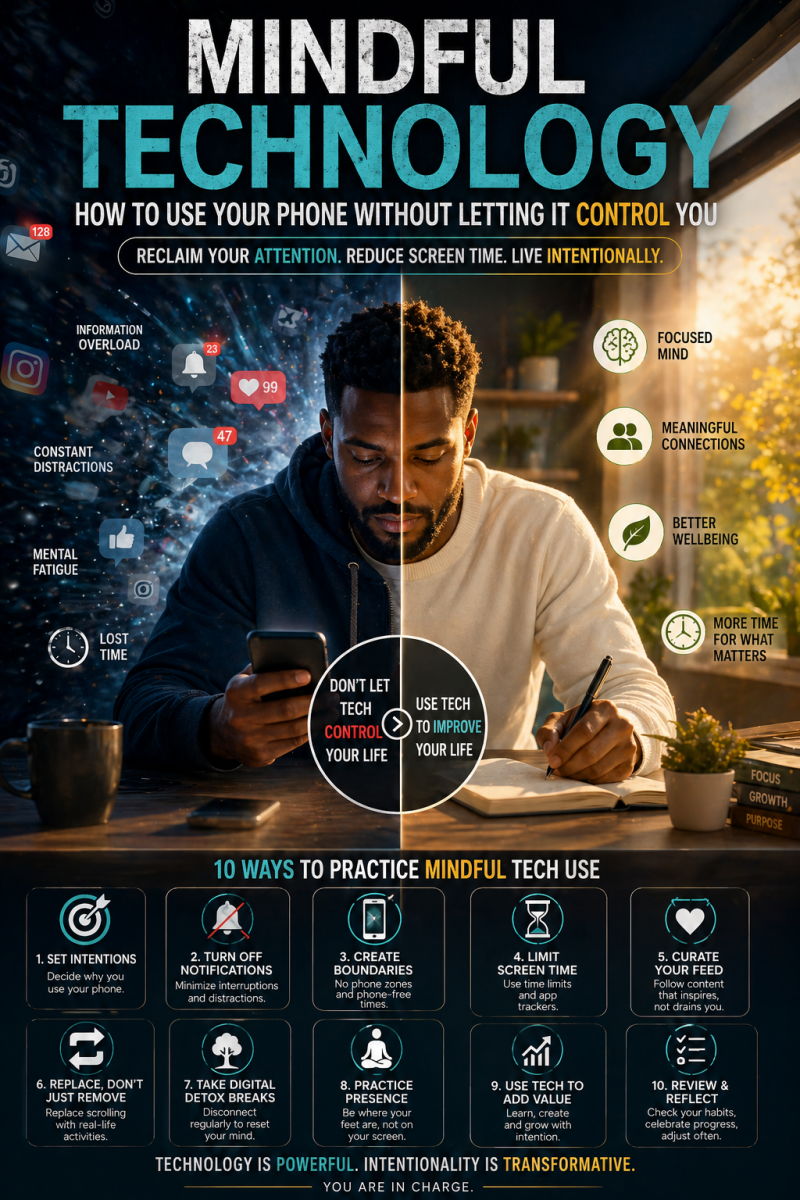
Introduction: Who’s Really in Control?
Be honest.
You picked up your phone today to check one thing…
and somehow ended up 20 minutes deep into content you didn’t plan to see.
No judgment—it happens to all of us.
But here’s the uncomfortable truth:
Your phone is not just a tool anymore.
It’s competing for your attention—constantly.
And often… It’s winning.
The Illusion of Control
Most people believe:
“I use my phone when I need it.”
But in reality:
- notifications pull you in
- apps keep you scrolling
- algorithms keep you engaged
Humor Break:
You don’t check your phone…
Your phone checks you 😄
What Is Mindful Technology?
Mindful technology is not about quitting your phone.
It’s about:
Using technology intentionally instead of automatically.
It means:
- choosing when to engage
- being aware of your usage
- controlling your attention
Instead of letting your attention be controlled.
Why Your Phone Feels So Addictive
Let’s be clear—this is not an accident.
Your phone is designed to:
- grab attention
- hold attention
- keep you coming back
How it works:
- notifications trigger curiosity
- endless scrolling removes stopping points
- Likes and messages provide instant rewards
Result:
Your brain gets trained to:
- seek constant stimulation
- avoid boredom
- check frequently
The Real Cost of Digital Overload
Using your phone isn’t the problem.
Uncontrolled use is.
Hidden consequences:
- reduced focus
- shorter attention span
- increased stress
- disrupted sleep
- less meaningful time with others
Truth:
The cost of distraction is not just lost time—
It’s lost its quality of life.
The Mindful Tech Shift: Awareness First
Before you change anything, you need awareness.
Ask yourself:
- How often do I check my phone?
- When do I use it most?
- What am I avoiding when I scroll?
Awareness creates control.
How to Use Your Phone Without Losing Control
Let’s get practical.
Step 1: Turn Off Non-Essential Notifications
Every notification is an interruption.
Keep only:
- important calls
- critical messages
Remove:
- social media alerts
- unnecessary app notifications
Result:
Fewer interruptions = better focus.
Step 2: Create “Phone-Free Zones”
Not every space needs your phone.
Examples:
- bedroom
- dining table
- work sessions
Why it works:
Your brain starts associating certain spaces with presence and focus.
Step 3: Use Your Phone With Intention
Before unlocking your phone, ask:
“Why am I picking this up?”
If you don’t have a clear answer…
You’re likely acting on habit, not intention.
Step 4: Limit Social Media Time
Social media is designed to keep you engaged—not fulfilled.
Try this:
- set time limits
- schedule specific usage times
- avoid early morning scrolling
Humor Break:
Opening social media for “just 5 minutes” is like opening a bag of snacks…
You already know how that ends 😄
Step 5: Replace Scrolling With Better Habits
You don’t just remove a habit—you replace it.
Instead of scrolling:
- read something meaningful
- take a short walk
- sit in silence (yes, that’s allowed)
Step 6: Embrace Boredom Again
Boredom is not a problem.
It’s a reset.
When you’re bored:
Your brain:
- processes thoughts
- restores focus
- sparks creativity
Truth:
Constant stimulation kills deep thinking.
Step 7: Set “Digital Boundaries”
Your phone should serve your life—not dominate it.
Examples:
- no phone first hour of the day
- no phone before sleep
- scheduled check-in times
Step 8: Clean Up Your Digital Environment
Your phone layout affects your behavior.
Optimize it:
- remove distracting apps from home screen
- organize apps intentionally
- keep only what adds value
Step 9: Focus on Real-Life Engagement
The more engaged you are in real life, the less you rely on your phone.
Invest in:
- conversations
- relationships
- meaningful work
- personal growth
Step 10: Be Intentional, Not Extreme
You don’t need to delete everything.
You need control.
Balance:
- use technology
- don’t depend on it
The Mature Perspective: Technology as a Tool
For mature audiences—professionals, entrepreneurs, leaders—the goal is not avoidance.
It’s mastery.
Reality:
The most successful people don’t avoid technology.
They control how they use it.
The Mindful Tech Formula
If you remember nothing else:
- reduce interruptions
- use with intention
- limit distractions
- create boundaries
- stay consistent
Conclusion: Take Back Your Attention
Your attention is one of your most valuable assets.
And in today’s world, it’s constantly being pulled in different directions.
Final Thought:
You don’t need to disconnect from technology.
You just need to reconnect with control.
So the next time you reach for your phone, pause and ask:
“Am I using this—or is it using me?”
Then choose wisely.
Add comment
Comments