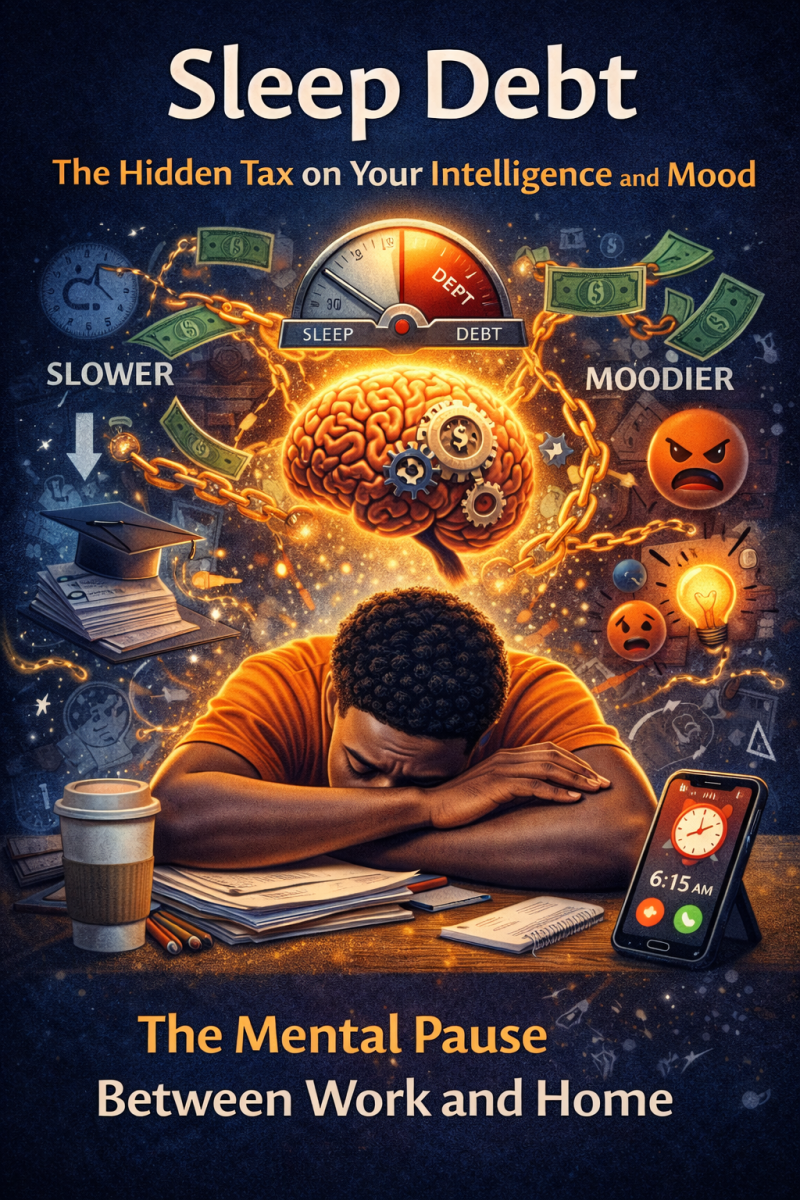
Introduction: You’re Paying a Tax You Can’t See
Most people treat sleep like a flexible expense.
“I’ll catch up later.”
“I function fine on 5 hours.”
“I’ll sleep this weekend.”
But your brain keeps receipts.
Every lost hour becomes sleep debt — and the interest compounds.
Sleep debt is the silent tax on your intelligence, mood, memory, and productivity.
You don’t feel it all at once.
You feel it gradually:
- slower thinking
- shorter patience
- foggy memory
- emotional irritability
- reduced creativity
And the worst part?
You adapt to the decline — so you think this version of tired is normal.
It isn’t.
What Is Sleep Debt?
Sleep debt is the gap between the sleep your body needs and the sleep you actually get.
If you need 8 hours but sleep 6:
You owe 2 hours.
Repeat this all week, and you’re running a 14-hour cognitive deficit.
That’s not minor fatigue.
That’s neurological overdraft.
The Brain Doesn’t “Get Used” to Less Sleep
People often claim:
“My body adjusted to less sleep.”
Science disagrees.
Research shows chronic sleep deprivation causes:
- slower reaction time
- impaired decision-making
- reduced working memory
- emotional instability
- weakened focus
The scary part?
People become bad judges of their own impairment.
You feel functional.
But your brain is underperforming.
Sleep Debt and Intelligence: The Hidden Decline
Sleep isn’t just rest.
It’s maintenance.
While you sleep, your brain:
- clears metabolic waste
- consolidates memory
- strengthens neural connections
- regulates emotional centers
- restores cognitive capacity
Skip sleep, and you interrupt repair.
It’s like running a computer without updates.
Eventually, performance degrades.
Sleep Deprivation Mimics Intoxication
Studies show:
17 hours awake, ≈ cognitive impairment of alcohol intoxication
24 hours awake, ≈ severe impairment
You wouldn’t choose to work drunk.
But millions operate sleep-deprived daily.
Mood Damage: Why Sleep Loss Makes Everything Feel Worse
Sleep debt doesn’t just dull intelligence.
It destabilizes emotion.
When sleep decreases:
- the amygdala (fear center) becomes hyperactive
- emotional regulation weakens
- stress tolerance collapses
- anxiety increases
- patience disappears
Small problems feel big.
Minor annoyances feel unbearable.
Not because life worsened.
Because your brain lost buffering capacity.
The Productivity Myth: Hustle vs Recovery
Modern culture glorifies exhaustion:
“Sleep when you’re dead.”
“Grind harder.”
“No days off.”
But productivity science says the opposite:
Rest is not the enemy of success. It’s the engine of it.
Elite performers prioritize sleep because recovery multiplies output.
Sleep is not laziness.
Sleep is a cognitive investment.
Why Weekend Catch-Up Doesn’t Fully Work
Sleeping 10 hours on Saturday doesn’t erase a week of deprivation.
It helps — but doesn’t reset fully.
Sleep debt accumulates faster than it repays.
Consistent sleep is more powerful than occasional oversleep.
The Signs You’re Carrying Sleep Debt
You may be sleep deprived if you:
- need multiple alarms
- rely heavily on caffeine
- feel groggy in the mornings
- forget simple tasks
- struggle to focus
- feel emotionally reactive
- crash mid-afternoon
- fall asleep instantly at night
These aren’t personality traits.
They’re biological signals.
How to Repay Sleep Debt (Without Destroying Your Schedule)
You don’t need perfection.
You need a strategy.
1. Add Sleep Gradually
Increase by 30–45 minutes per night.
Consistency beats extremes.
2. Protect Your Sleep Window
Treat sleep like a meeting you cannot cancel.
Schedule it.
3. Reduce Nighttime Stimulation
- dim lights
- limit screens
- lower noise
- avoid heavy thinking tasks
Signal shutdown.
4. Use Morning Light Exposure
Sunlight resets the circadian rhythm.
Wake your brain naturally.
5. Create a Wind-Down Ritual
Same time, same cues:
- shower
- reading
- breathing
- quiet reflection
Repetition trains sleep readiness.
Sleep as a Competitive Advantage
Most people are chronically tired.
Rested people outperform them.
Sharper decisions.
Better memory.
Stronger emotional control.
Higher productivity.
More creativity.
Sleep is the unfair advantage nobody markets loudly.
Because it’s simple.
And powerful.
Conclusion: You Can’t Outwork a Tired Brain
The modern world rewards hustle.
Biology rewards balance.
Sleep debt steals quietly:
intelligence, patience, clarity, joy.
Repaying it restores everything.
Sleep is not time lost. It is performance gained.
Protect it like capital.
Because your brain is your most valuable asset.
7-Day Sleep Reset Challenge
Day 1–2: Add 30 minutes of sleep
Day 3–4: Fixed bedtime
Day 5–6: Remove screens before bed
Day 7: Track energy & mood
Repeat weekly.
Add comment
Comments